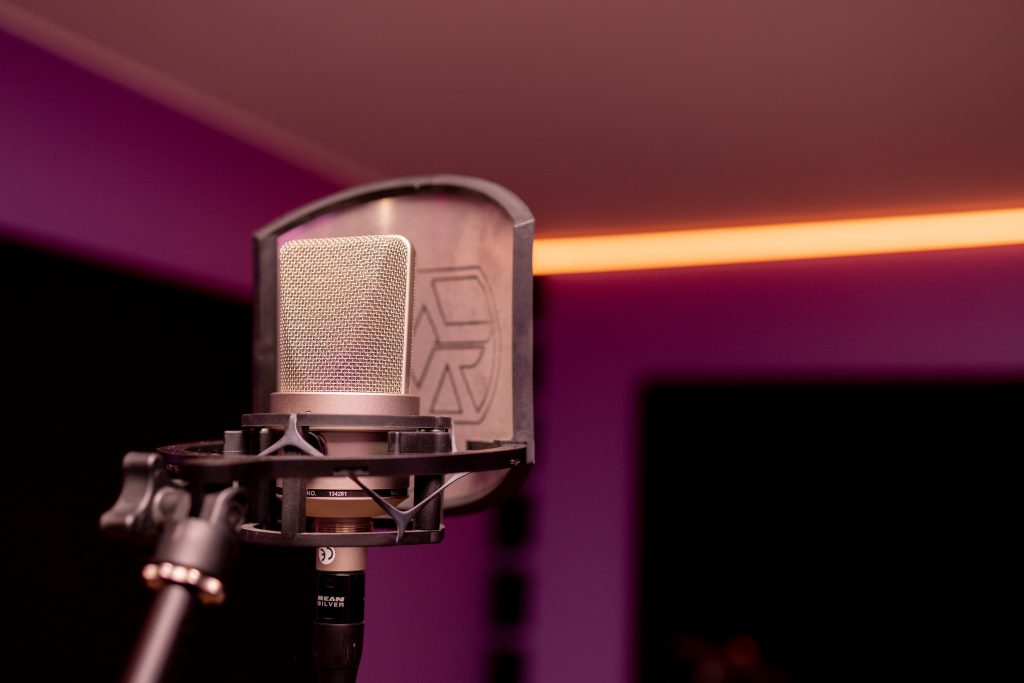
We’ve nervously stepped up to the mic as artists AND seen other artists get that deer-in-the-headlights look when choosing mics from our engineer’s seat.
One thing we can say is that all those microphones hanging around the studio are a good thing. The more the merrier! Give us all the microphone option paralysis we can handle! Why? Because each one has its own personality and its own way of hearing the world. Think of them like different pairs of ears. Some are great listeners for intimate conversations, others are built for capturing the energy of a rock show, and some are just perfect for picking up every nuance of a whispered confession.
The point is, the more options you have, the better chance you have of capturing your perfect sound. You just need to know how to navigate the mic maze.
Getting personal with your mic choice
The whole “right mic for the job” thing is genuinely important. We’ve watched incredible performances get buried under the wrong microphone choice, and seen average takes come alive when we switched to something that just clicked with the artist’s voice or instrument.
Take vocals, for instance. You might think any decent mic will do the trick, but the difference is night and day. A Neumann TLM 103 is going to give you this crisp, present sound that cuts through a mix beautifully, which is perfect if you’re going for that modern pop sound or want your vocals to really command attention. But sometimes that’s not what the song needs.
An Aston Origin might be the better call when you want something warmer, more conversational. It’s like the difference between speaking into a megaphone versus having a heart-to-heart with your best friend.
When singers get frustrated because their voice sounds too polished, or too perfect for the really personal, raw songs they’ve written, a switch from the Neumann to the Aston completely shifts the situation. The mic shouldn’t be fighting against the intimate vibe you are going for; it should be supporting them.
Mics and guitars
Acoustic guitar recording is where things get really interesting. You could just throw up one mic and call it good, but why settle for good when you can get something special? The X/Y stereo technique using an Audio-Technica AT2020 paired with a Shure SM57 gives you the best of both worlds. The AT2020 grabs all that rich, woody resonance from near the soundhole, while the SM57 picks up the clarity and fingerwork happening up by the frets.
It’s like having two different seats at a concert: one where you feel the bass in your chest, another where you can hear every string bend and hammer-on. When you blend them together, you get this full, three-dimensional picture of the guitar that just sits perfectly in a mix.
The SM57, by the way, is probably the most versatile mic ever made. We use it on snare drums where it delivers that punchy crack that cuts through everything else, and it’s our go-to for guitar amps too. There’s something about how it handles midrange frequencies that just works, whether you’re recording a screaming Marshall stack or a clean Fender Twin.
Beyond the obvious choices
For drums, we love pairing that trusty SM57 on the snare with some Rode NT5s as overheads. Here’s something a lot of people don’t realise about overhead mics: They’re not just there to capture cymbals. They’re capturing the entire kit in the room, giving you that sense of space and energy that makes drums feel alive instead of like a bunch of isolated sounds.
Voiceover work is its own beast entirely. An Aston Stealth gives you that smooth, broadcast-ready sound that works great for professional narration or podcasts where clarity is king. But sometimes you want something with more character, more personality. A Shure SM58 can add this warmth and familiarity that makes the listener feel like they’re having a conversation rather than being lectured to.
A secret we’ve learned after years of recording
The best microphone choice isn’t always the most expensive one or the one with the most impressive specs. It’s the one that serves the song and supports what the artist is trying to say.
We’ve heard million-dollar vocals recorded on budget mics that happened to be perfect for that particular voice and song. We’ve also heard expensive gear used poorly that made great performances sound sterile and lifeless.
The magic happens when you stop thinking about microphones as tools and start thinking about them as collaborators. Each one brings something different to the creative process. Some are great at capturing aggression and energy, others excel at intimacy and subtlety. The trick is knowing which personality fits the moment.
All the technical knowledge in the world doesn’t matter if you’re not listening (really listening) to what the music needs. The right microphone choice should feel invisible like it’s not even there. When you record at Nest Studio, our team is here to make sure the mic choice helps the artist’s vision come through as clearly and powerfully as possible. That’s when you know you’ve found your mic match.